
Sun spots and melasma
The American Academy of Dermatology says: "Age spots appear on areas of your body that the sun's rays often hit, such as your face and hands." The four questions below start from that kind of mark and from melasma. The desk answers them for Roswell readers, along with questions on sun damage, laser resurfacing, PRP, and IPL and BBL.
Why a spot is a looking question first
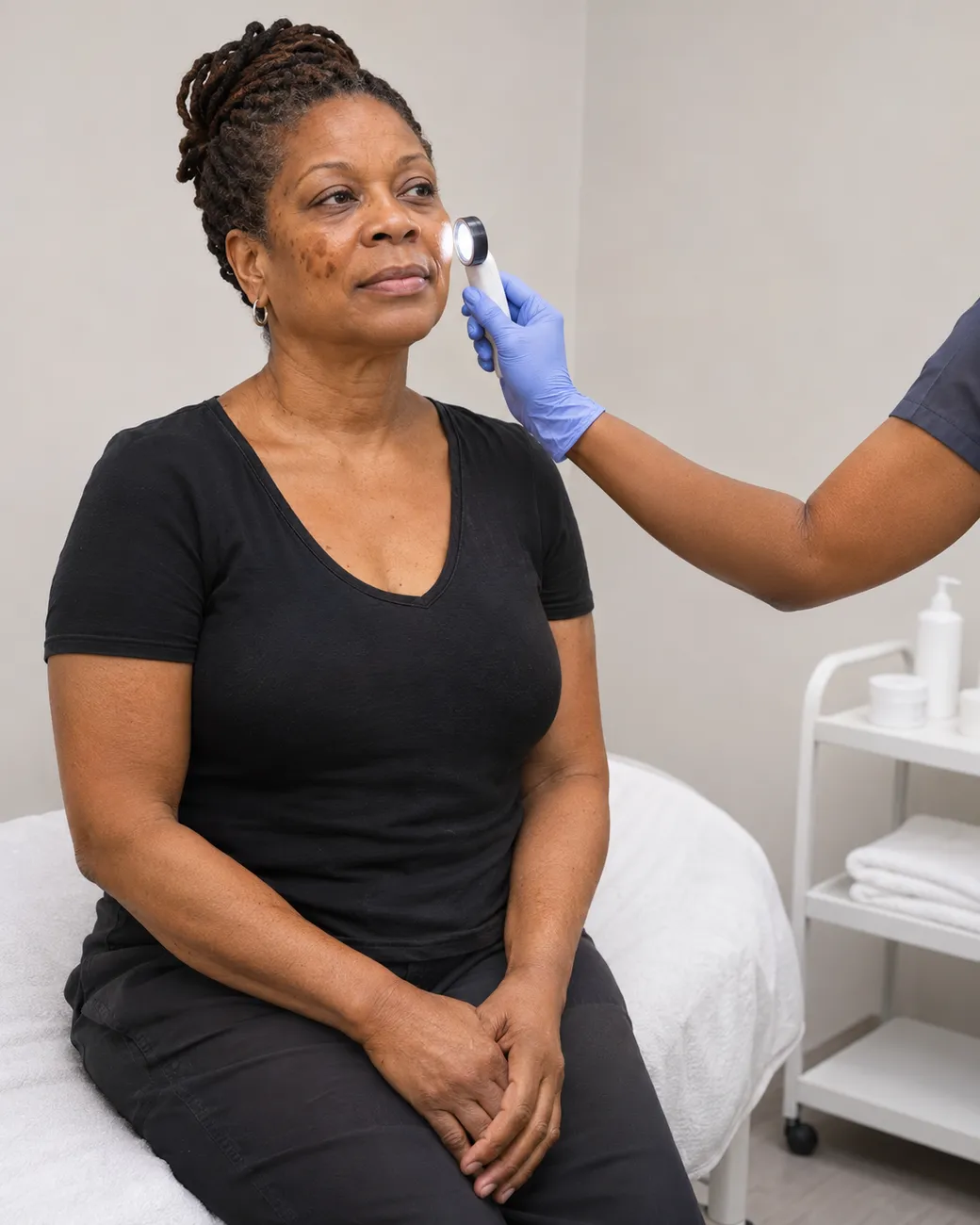
On this desk a spot is a looking question before it is a reading question. A page can explain terms and treatment options. Only someone who can see the spot can say anything about it. The questions below are reading questions meant to prepare you for that visit.
First step
Can melasma go away on its own? is the first question on this page. The American Academy of Dermatology also has a page on the signs and symptoms of melasma.
Home care limits
Can I treat hyperpigmentation at home? is the home care question. It covers what you can do yourself. A spot you cannot explain is a looking question and stays with a clinician.
When to book
How is hyperpigmentation treated? and Are there any procedures that can help melasma? are the questions to read before booking.
Related pages
Cleveland Clinic covers pigmented lesions, including tattoo and birthmark removal, which suits a reader asking about one mark. The Harvard Health article on platelet-rich plasma and hair loss covers PRP in the setting of hair loss. This desk's own PRP questions are on PRP for skin.
What you handle and what you show
You can read, compare and write down questions. A spot on your own skin is for a clinician to look at, so book the visit and bring the list.